

Modern retailers require rapid visual scaling to maintain competitive advantage. Recent industry reports indicate that automated visual generation now accounts for nearly forty percent of digital marketing assets deployed by mid-market brands. This shift eliminates traditional studio bottlenecks while preserving brand consistency across thousands of SKUs. Companies adopting these platforms report measurable improvements in conversion rates and reduced time-to-market. Selecting the right software architecture requires understanding core capabilities, pricing models, and integration pathways.
Understanding AI Visual Generation
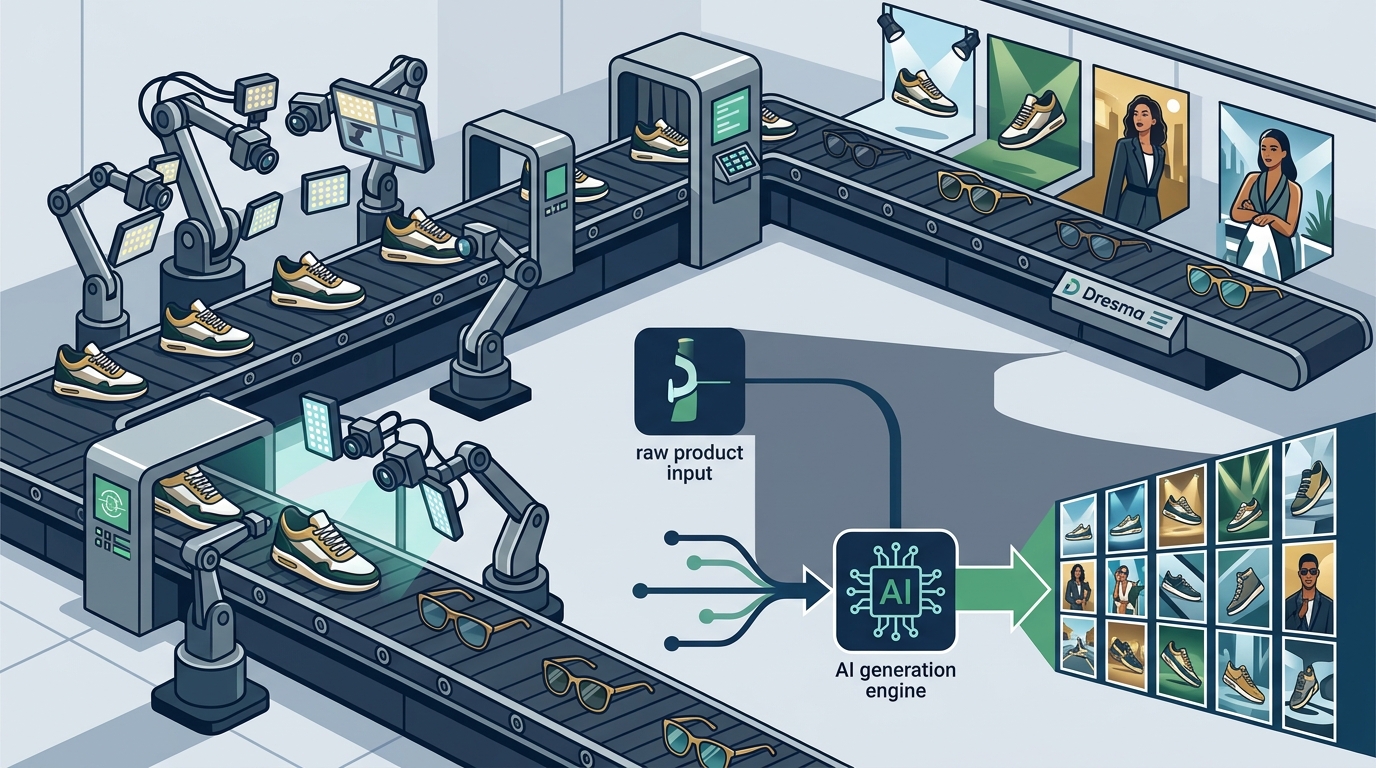
AI product image generation is the automated creation of commercial-grade visuals using machine learning algorithms trained on retail datasets. These systems analyze raw input files and reconstruct lighting, shadows, and backgrounds to match professional studio standards. Marketers leverage these outputs for catalog updates, social campaigns, and marketplace listings. The technology eliminates manual retouching while maintaining strict brand guidelines. Automated product photography platforms now process millions of assets daily without human intervention. (About Us)
Platform Architecture Comparison
Leading solutions divide into three distinct operational categories. Generative adversarial networks is a computational framework that synthesizes realistic backgrounds through iterative training cycles. Diffusion-based models is a rendering methodology that reconstructs material textures by progressively removing noise from latent data. Hybrid architectures combine both approaches to handle complex product geometries. Each architecture serves different enterprise requirements. Retailers must evaluate their specific output needs before committing to a vendor. (AI Content Creation Visual)
Workflow Integration Strategies
Successful deployment requires seamless connection to existing enterprise resource planning systems. Automated pipelines extract product metadata and route raw files to processing queues. Quality assurance checkpoints verify color accuracy and compliance with marketplace guidelines. Teams can export finalized assets directly to content management systems. This streamlined approach reduces manual handoffs and prevents version control errors. Organizations should review our case studies to see real-world deployment results. (www dresma com)
Cost and Scalability Models
Subscription tiers typically scale according to monthly credit allocations. Enterprise packages offer dedicated infrastructure and priority processing queues. Usage-based pricing remains the industry standard for flexible marketing teams. Organizations should project their annual asset volume before selecting a plan. Predictable budgeting prevents unexpected overage charges during peak promotional periods. Review our Amazon optimization page to streamline marketplace listings.
Implementation Best Practices
High-fidelity outputs depend on consistent input quality. Photographers should capture raw files with neutral lighting and minimal reflections. Product managers must standardize naming conventions and metadata fields. Quality control teams should establish acceptance criteria before bulk processing. Regular model retraining ensures alignment with evolving brand aesthetics. Review our about us page to understand our operational framework.
| Feature Category | Generative Networks | Diffusion Models | Hybrid Architectures |
|---|---|---|---|
| Background Synthesis | High | Medium | Very High |
| Texture Accuracy | Medium | Very High | High |
| Processing Speed | Fast | Moderate | Fast |
| Enterprise Integration | Standard | Advanced | Full |
Key Takeaways
- Automated visual generation now accounts for nearly forty percent of digital marketing assets.
- Generative adversarial networks excel at background synthesis and scene composition.
- Diffusion-based models deliver superior texture mapping and material accuracy.
- Hybrid architectures combine both approaches for maximum enterprise flexibility.
- Subscription tiers scale according to monthly credit allocations and processing queues.
- Consistent input quality directly correlates with final output fidelity.
- Standardized metadata fields prevent version control errors during bulk processing.
Frequently Asked Questions
How do automated platforms handle complex product geometries?
Advanced systems utilize multi-angle input processing to reconstruct three-dimensional surfaces. These platforms generate consistent lighting and shadow mapping across all viewing angles. Retailers benefit from uniform visual standards across entire catalogs.
What is the typical processing time for bulk orders?
Standard enterprise queues process thousands of assets within twenty-four hours. Priority routing options reduce turnaround times to under six hours. Marketing teams can align processing schedules with campaign launch dates.
Can these tools integrate with existing marketplace APIs?
Modern architectures support direct synchronization with major retail platforms. Automated pipelines push finalized assets to product information management systems. This capability eliminates manual upload steps and reduces data entry errors.
How do subscription models handle seasonal traffic spikes?
Flexible credit systems allow marketers to purchase additional processing capacity on demand. Enterprise contracts often include guaranteed bandwidth during peak promotional periods. Organizations can scale operations without disrupting ongoing campaigns.
What quality assurance protocols do leading vendors implement?
Automated validation checks verify color accuracy, resolution standards, and compliance guidelines. Human review layers remain available for high-value product categories. Retailers maintain strict brand consistency across all generated assets.
Next Steps for Visual Scaling
Modern retailers require rapid visual scaling to maintain competitive advantage. Companies adopting these platforms report measurable improvements in conversion rates and reduced time-to-market. Selecting the right software architecture requires understanding core capabilities, pricing models, and integration pathways. Explore our comprehensive case studies to review real-world deployment results. Visit our Amazon optimization page to streamline marketplace listings. Review our about us page to understand our operational framework. Begin your automated visual workflow today by accessing the application dashboard at https://app.dresma.com/.