

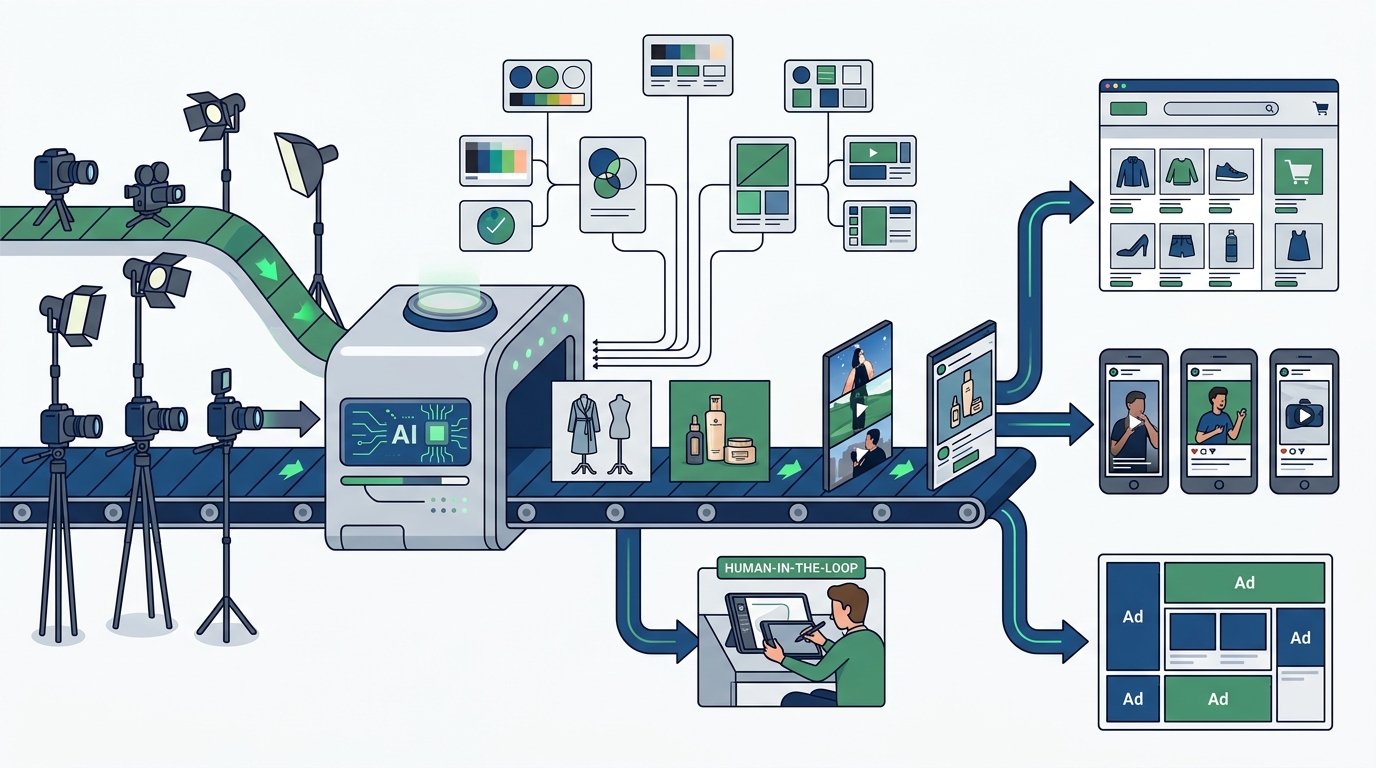
Modern eCommerce brands face mounting pressure to publish visual assets at unprecedented speeds. Market data shows that companies utilizing automated visual workflows generate 42 percent higher conversion rates than those relying on traditional studio shoots. Scaling content production without hiring a creative team requires a strategic shift toward artificial intelligence and standardized digital pipelines. Brands must replace manual editing cycles with automated generation engines. This approach eliminates bottlenecks while maintaining brand consistency across every sales channel. (AI Content Creation Visual)
AI Visual Workflows
Defining the Core Concept
Generative visual automation is the systematic replacement of manual photography with algorithmic image generation. Brands leverage machine learning models to render products in diverse environments. This process eliminates the need for physical props, studio lighting, and on-site photographers.
Implementing the Pipeline
Teams begin by uploading raw product files to a centralized dashboard. The system automatically detects edges, removes backgrounds, and applies lighting adjustments. Marketers then select predefined lifestyle templates. The platform generates multiple variations in minutes. This workflow drastically reduces turnaround times from weeks to hours.
Automated Product Photography
On Model Studio Shots
On Model Studio Shots is a specialized rendering technique that places products onto realistic human models without physical casting. Retailers benefit from diverse demographic representation across global markets. The algorithm adjusts fabric textures, skin tones, and environmental lighting to match brand guidelines.
Lifestyle Image Generation
Product Lifestyle Images is the automated creation of contextual scenes that demonstrate product usage in real-world settings. Shoppers require visual proof of scale, texture, and functionality before purchasing. Automated engines simulate natural lighting and environmental interactions. This capability directly correlates with reduced return rates and increased average order values.
Scaling With Credits
Flexible Resource Allocation
Modern platforms utilize a credit-based consumption model to manage production volumes. Teams purchase bulk credits and allocate them across different asset types. This structure prevents budget overruns during peak promotional seasons. Managers can track usage metrics in real time through a centralized dashboard.
Workflow Customization
Custom workflow automation allows enterprises to chain multiple generation steps into a single execution command. Designers define specific parameters for color grading, aspect ratios, and background complexity. The system executes these instructions without manual intervention. This standardization ensures brand compliance across thousands of SKUs.
Platform Integration
Amazon A+ Content Optimization
Amazon A+ Content is the enhanced product description module that replaces standard text with rich visual media. Sellers must comply with strict platform guidelines regarding image resolution and file formats. Automated generators export assets in approved specifications directly to the seller portal. This integration eliminates manual file conversion and reduces listing errors.
Multi-Channel Distribution
Retailers distribute generated assets across social media, email campaigns, and marketplace listings simultaneously. A single source of truth maintains visual consistency across all touchpoints. Marketing teams schedule posts using native platform APIs. This synchronization maximizes reach while minimizing operational overhead.
Quality Control
Automated Compliance Checks
Automated compliance verification scans every generated asset against brand guidelines and platform regulations. The system flags low-resolution outputs, incorrect color profiles, or prohibited text overlays. Editors review flagged items before publishing. This gatekeeping process prevents costly rejections and maintains store health scores.
Iterative Feedback Loops
Continuous improvement algorithms learn from user corrections and approval patterns. The model adjusts its rendering parameters based on historical performance data. Teams observe gradual improvements in visual fidelity and engagement metrics. This adaptive learning curve reduces the need for constant manual oversight.
Cost Efficiency
Budget Reallocation Strategies
Traditional studio shoots require substantial capital for equipment, location rentals, and personnel wages. Automated generation shifts expenditures toward software subscriptions and strategic planning. Marketing directors redirect saved funds toward paid advertising and customer acquisition. This financial optimization directly improves overall return on investment.
Operational Scalability
Operational scalability is the ability to increase output volume without proportionally increasing labor costs. Digital pipelines process thousands of images concurrently without hardware limitations. Teams expand catalog coverage during seasonal peaks without hiring temporary staff. This flexibility ensures consistent brand presence across global markets.
| Production Method | Turnaround Time | Cost Per Asset | Scalability Limit | Best Use Case |
|---|---|---|---|---|
| Traditional Studio Shoot | 2 to 4 weeks | $150 to $500 | Low (Manual labor) | High-end flagship campaigns |
| AI Lifestyle Generation | Minutes to hours | $2 to $15 | High (Automated pipelines) | Mass catalog updates |
| On Model Studio Shots | 1 to 3 days | $25 to $75 | Medium (Template-based) | Diverse demographic representation |
| White Background Images | Seconds to minutes | $0.50 to $5 | Very High (Batch processing) | Marketplace compliance |
Key Takeaways
- Automated visual workflows generate 42 percent higher conversion rates than traditional shoots.
- 50,000+ brands currently utilize AI generation platforms to manage global catalogs.
- Credit-based consumption models prevent budget overruns during peak promotional seasons.
- On Model Studio Shots eliminate physical casting costs while ensuring demographic accuracy.
- Amazon A+ Content integration exports assets in platform-approved specifications automatically.
- Custom workflow automation chains multiple generation steps into single execution commands.
- Operational scalability allows thousands of concurrent image processes without hardware limits.
Frequently Asked Questions
How does AI handle complex product textures like fabrics or metals?
Advanced rendering engines analyze surface reflectance and weave patterns to generate photorealistic outputs. The system applies physically based rendering techniques to mimic light interaction. Users can adjust roughness and metallic parameters directly in the dashboard.
Can automated tools replace human photographers entirely?
Automated tools handle routine catalog updates and standard lifestyle placements. Human photographers remain essential for high-concept brand campaigns and artistic direction. The optimal strategy combines both approaches for maximum market coverage.
What happens if a generated image violates platform guidelines?
Automated compliance verification scans outputs against marketplace rules before export. The system flags prohibited text, incorrect aspect ratios, or low-resolution files. Editors review flagged assets and approve or regenerate them instantly.
How do credit systems work for enterprise accounts?
Enterprise accounts purchase bulk credits and allocate them across different asset types. Managers track usage metrics through a centralized dashboard and adjust allocations dynamically. Unused credits typically roll over to the next billing cycle.
Is there a learning curve for integrating these tools into existing workflows?
Integration requires basic familiarity with digital asset management systems. Teams complete onboarding tutorials and configure brand guidelines within the dashboard. Most organizations achieve full operational proficiency within two weeks.
Ready to Transform Your Content Pipeline?
Stop letting manual production bottlenecks limit your market expansion. Start generating high-converting visuals today and join thousands of brands optimizing their sales funnels. Review proven implementation strategies or explore our enterprise support options. Scale your catalog, reduce overhead, and dominate your niche with automated precision.