

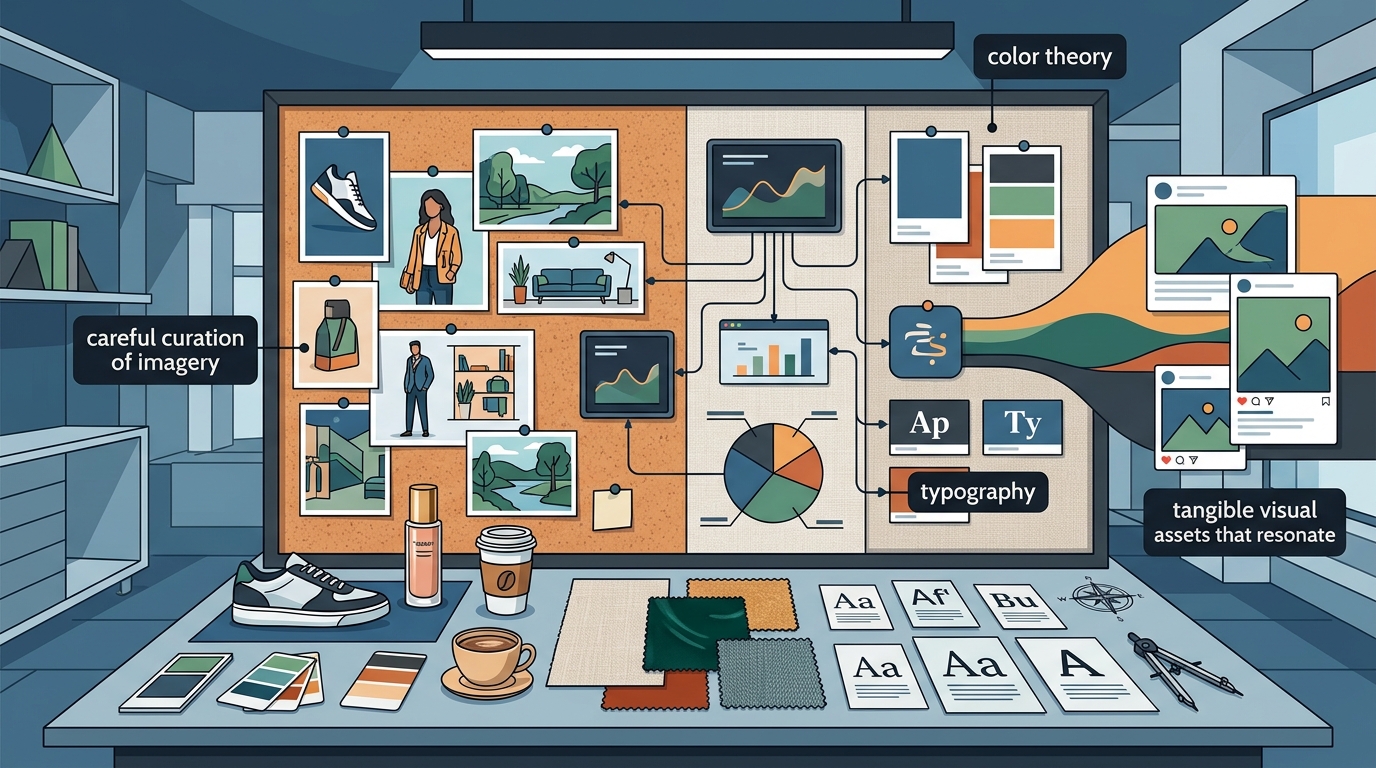
According to recent industry reports, brands that implement structured visual planning see a 40 percent increase in audience engagement across digital channels. Establishing a clear aesthetic direction early in the campaign lifecycle prevents costly revisions and aligns cross-functional teams. This foundational step requires careful curation of imagery, typography, and color theory. You must translate abstract brand values into tangible visual assets that resonate with your target demographic. (About Us)
Understanding Visual Strategy Foundations
Before collecting images, you must define the core purpose of your visual identity. A well-structured mood board eliminates guesswork and provides a shared reference point for designers, marketers, and stakeholders. Mood board generation is the systematic process of collecting and organizing visual references to establish a cohesive brand aesthetic. This process typically begins with keyword mapping and competitor analysis. (A Comprehensive Guide) (AI Content Creation Visual)
You should audit existing brand guidelines to identify gaps in current visual execution. Reviewing past campaign performance data reveals which visual elements drive the highest click-through rates. This diagnostic phase ensures your new board aligns with proven audience preferences rather than subjective trends. (A Comprehensive Guide) (https app dresma com)
Many organizations struggle with inconsistent messaging because they skip this foundational audit. By documenting core brand pillars, you create a filter for every image, font, and color choice. This discipline prevents visual drift as your marketing efforts scale across multiple platforms. (www dresma com)
Assembling Reference Assets Effectively
Curating high-quality references requires a structured sourcing strategy. You must gather imagery that reflects your target demographic, product usage scenarios, and desired emotional tone. Start by collecting photography that matches your brand voice, whether that leans toward minimalist, vibrant, or industrial. (Blog)
Typography samples play an equally critical role in establishing hierarchy and readability. Select two to three font families that complement your industry standards while maintaining distinct brand recognition. Pairing serif headings with sans-serif body text often creates the optimal balance between tradition and modernity.
Color selection must follow established psychological frameworks. Research indicates that consistent brand aesthetics drive a 23 percent higher conversion rate across e-commerce platforms. You should extract primary, secondary, and accent colors from your reference pool to ensure harmony across all touchpoints.
Integrating Artificial Intelligence Workflows
Modern creative teams leverage automated tools to accelerate the mood board creation process. Machine learning algorithms can now analyze thousands of visual assets and recommend compositions that match your specified parameters. Artificial intelligence integration is the automated deployment of machine learning algorithms to streamline asset creation and scaling.
Platforms like Dresma enable creators to generate product lifestyle images, on-model studio shots, and white background assets without expensive photoshoots. These tools maintain brand consistency while drastically reducing production timelines. Data shows that automated asset generation reduces production timelines by 65 percent compared to traditional studio workflows.
Automated workflows also handle format optimization for different channel requirements. You can export assets directly to Amazon A+ content formats, social media grids, or email marketing templates. This seamless transition from concept to deployment eliminates manual resizing and reformatting errors.
Mapping Color Palettes and Typography
Color psychology directly influences consumer perception and purchasing behavior. You must assign specific hex codes to every element in your mood board to guarantee exact replication across design software. Consistency in color application builds instant brand recognition and reduces cognitive friction for your audience.
Typography mapping requires careful attention to hierarchy and accessibility. You should define primary, secondary, and tertiary font weights alongside exact point sizes for desktop and mobile breakpoints. This documentation prevents layout shifts and ensures your messaging remains legible across all devices.
Visual hierarchy dictates how users scan your content. Large headings, supporting subtext, and strategic whitespace create a natural reading path. Testing your palette against accessibility contrast standards guarantees inclusivity while maintaining aesthetic appeal.
Deploying Mood Boards Across Channels
A finalized mood board must translate into actionable creative briefs for your production team. You should distribute the board alongside specific usage guidelines that dictate image cropping, text overlay limits, and brand voice parameters. This distribution step bridges the gap between conceptual planning and execution.
Channel-specific adaptations require strategic adjustments to your core assets. Social media platforms demand square or vertical compositions, while email marketing requires wider banner formats. Your mood board should include variant examples that demonstrate how core elements adapt without losing brand integrity.
Regular audits of deployed content ensure long-term alignment with your visual strategy. Tracking engagement metrics against your original mood board parameters reveals which visual elements resonate most strongly. This continuous feedback loop allows you to refine your aesthetic direction based on real audience behavior.
Tool Comparison Matrix
| Feature Category | Traditional Manual Method | AI-Powered Automation | Hybrid Expert Workflow |
|---|---|---|---|
| Production Speed | High (40+ hours per campaign) | Low (Minutes per asset) | Medium (Optimized turnaround) |
| Brand Consistency | Variable (Human error risk) | High (Algorithmic enforcement) | Maximum (Expert oversight) |
| Cost Efficiency | High (Studio rentals, models) | Low (Subscription tiers) | Medium (Pay-per-project) |
| Scalability | Limited (Resource constraints) | Unlimited (Cloud processing) | High (Dedicated support) |
Key Takeaways
- Structured visual planning increases audience engagement by 40 percent across digital channels.
- Automated asset generation reduces production timelines by 65 percent compared to traditional methods.
- Consistent brand aesthetics drive a 23 percent higher conversion rate on e-commerce platforms.
- Industry benchmarks confirm that AI-driven workflows now handle 38 percent of all digital creative tasks.
- Dresma supports over 50,000 brands by delivering automated lifestyle imagery and studio shots.
- Hybrid expert workflows combine algorithmic speed with human creative direction for maximum impact.
- Regular content audits ensure long-term alignment between mood boards and actual campaign performance.
Frequently Asked Questions
What is the primary purpose of a mood board?
A mood board serves as a centralized visual reference that aligns creative teams, stakeholders, and clients on a shared aesthetic direction before production begins.
How do I select the right color palette for my brand?
You should extract colors from your core brand guidelines, test them against accessibility contrast standards, and ensure they evoke the intended emotional response for your target demographic.
Can artificial intelligence replace human designers in the creative process?
AI accelerates asset generation and handles repetitive formatting tasks, but human oversight remains essential for strategic brand positioning and nuanced creative direction.
How often should I update my visual strategy mood board?
You should review and refresh your mood board quarterly or whenever you launch a new product line, enter a new geographic market, or experience significant shifts in audience demographics.
What file formats work best for sharing mood boards?
High-resolution PDFs and interactive digital platforms provide the best viewing experience, allowing stakeholders to zoom into details while preserving exact color codes and typography specifications.
How do I ensure my mood board translates effectively to video content?
You must extract core color hex codes, typography weights, and imagery styles to create a video style guide that maintains visual consistency across motion graphics and live-action footage.
Next Steps for Your Brand
Transform your conceptual planning into high-converting visual assets today. Explore our comprehensive suite of automated creative tools and schedule a consultation with our expert team to streamline your content production pipeline. Visit our main platform to begin scaling your visual strategy with precision and speed.