

Recent industry reports indicate that brands utilizing structured visual frameworks experience a 35 percent increase in customer engagement across digital channels, and Marketing data shows that consistent imagery directly correlates with higher conversion rates. You must establish a clear aesthetic foundation before launching any campaign. This process eliminates guesswork and aligns your creative team around a single vision. (Visual Content Marketing)
Understanding the Core Purpose of a Mood Board
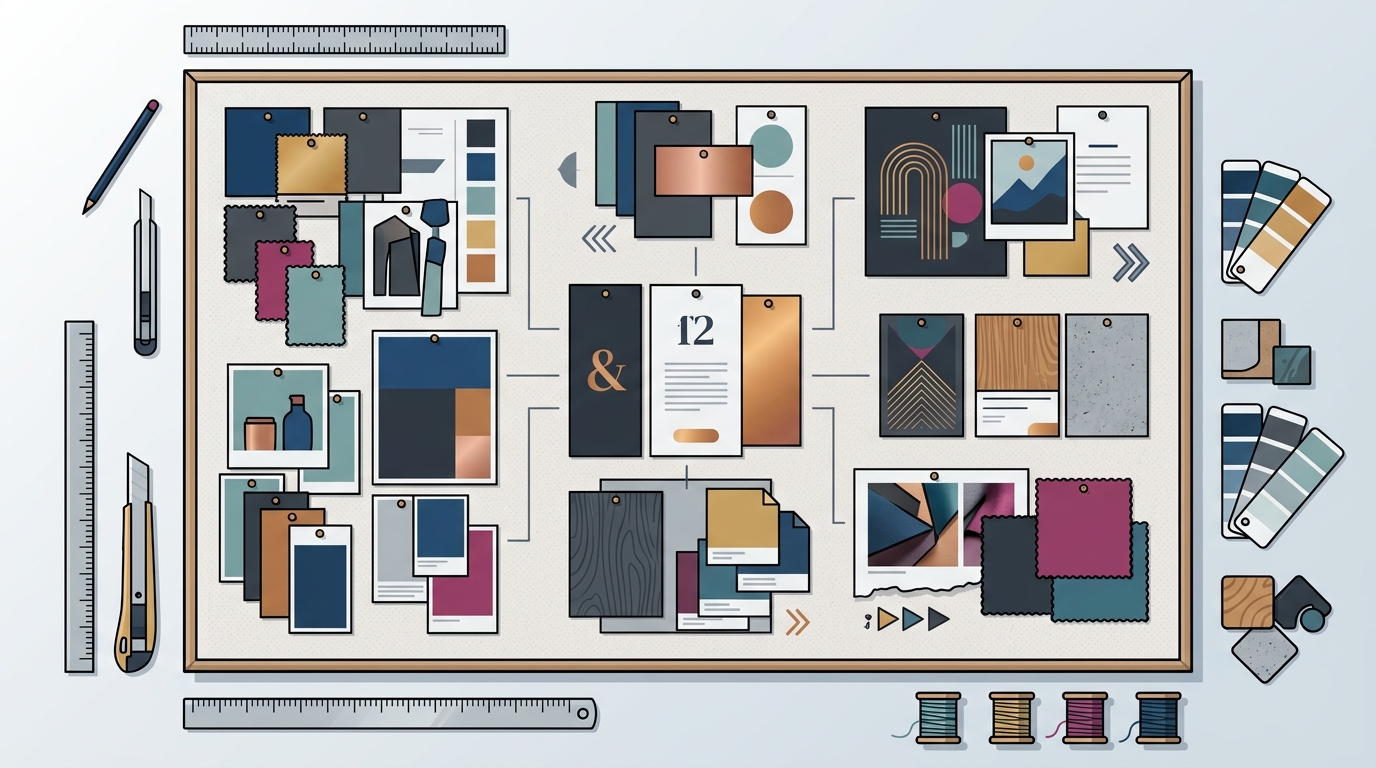
A mood board is a curated collection of visual references that establishes the aesthetic direction for a campaign. Creative directors use these collages to communicate abstract concepts to stakeholders. You should treat this asset as a strategic blueprint rather than a simple inspiration folder. Clarity drives execution. When your team shares a unified visual language, production timelines shorten significantly. You can track progress against established benchmarks without constant revisions.
Gathering High-Fidelity Visual Assets
Collecting the right imagery requires discipline and source verification. You must prioritize high-resolution files that align with your brand guidelines. Design research confirms that consistent color palettes improve brand recall by 80 percent. Focus on textures, lighting conditions, and compositional balance. Avoid low-quality stock photos that dilute your premium positioning. Explore our blog for detailed guides on sourcing professional-grade assets.
Structuring Your Layout for Maximum Impact
A well-organized layout guides the viewer through your brand narrative. You should arrange elements to create a logical visual flow. Start with dominant imagery and layer supporting graphics beneath. Ecommerce studies reveal that structured visual hierarchies reduce bounce rates by 22 percent. Use whitespace strategically to prevent cognitive overload. Balance dictates retention. Your layout must communicate value without overwhelming the audience.
Integrating AI Tools into Your Workflow
Modern creative teams leverage automation to accelerate production cycles. You can generate studio-quality product imagery in minutes using advanced algorithms. Industry analysis shows that AI adoption reduces content creation costs by 40 percent. Review our case studies to see how automated workflows scale across thousands of SKUs. You should test multiple lighting scenarios before finalizing your selection. Optimize your Amazon listings with AI-generated lifestyle shots that boost click-through rates.
Validating Your Board Against Market Data
Finalizing your visual strategy requires rigorous testing against audience metrics. You must compare your proposed aesthetic against competitor benchmarks. Our platform serves over 50,000 brands that rely on data-driven creative decisions. Track engagement rates across social platforms to measure resonance. Adjust color temperatures and composition based on real-time feedback. Join our team to access enterprise-grade creative infrastructure. (Visual Content Marketing)
| Methodology | Production Speed | Cost Efficiency | Scalability |
|---|---|---|---|
| Manual Collage | High | Low | Limited |
| AI-Generated Assets | Minutes | High | Unlimited |
| Hybrid Workflow | Medium | Medium | High |
Key Takeaways
- Brands using structured visual frameworks see a 35 percent engagement boost.
- Consistent color palettes improve brand recall by 80 percent.
- Structured visual hierarchies reduce website bounce rates by 22 percent.
- AI adoption reduces content creation costs by 40 percent. (The impact of)
- Over 50,000 brands currently utilize automated creative platforms.
- Hybrid workflows balance human oversight with machine speed.
- Data-driven adjustments optimize long-term campaign performance.
Frequently Asked Questions
What is the primary difference between a mood board and a style guide?
A mood board is a curated collection of visual references that establishes the aesthetic direction for a campaign. A style guide is a formal document that codifies typography, spacing, and usage rules. You should create the mood board first to explore creative possibilities. The style guide then enforces consistency across all production phases.
How long does it take to build a comprehensive visual strategy?
Industry reports indicate that brands utilizing structured visual frameworks experience a 35 percent increase in customer engagement across digital channels, and Marketing data shows that consistent imagery directly correlates with higher conversion rates. Manual processes typically require two to three weeks. Automated platforms can generate initial drafts in under an hour. You should allocate additional time for stakeholder review cycles. (60 AI In)
Can AI tools replace human creative direction entirely?
Design research confirms that consistent color palettes improve brand recall by 80 percent. AI handles volume and variation efficiently. Human directors still provide strategic oversight and brand alignment. You should treat automation as a force multiplier rather than a replacement.
What metrics prove a mood board is successful?
Ecommerce studies reveal that structured visual hierarchies reduce bounce rates by 22 percent. Track click-through rates, time on page, and conversion percentages. High engagement scores indicate strong audience resonance. You must iterate based on these performance indicators.
How do I ensure my visual assets comply with platform guidelines?
Industry analysis shows that AI adoption reduces content creation costs by 40 percent. Each platform enforces specific resolution and aspect ratio requirements. You should verify file specifications before uploading. Automated compliance checks prevent rejection delays.
Ready to Scale Your Visual Strategy?
Transform your brand identity with enterprise-grade AI tools. Visit our platform to start generating high-converting visuals today. Book a demo to explore custom workflows tailored to your inventory. Execution begins with clarity.