

Modern brands require a unified visual identity to capture attention across digital channels. Visual content drives significantly higher engagement rates than text-only posts across major social platforms. Establishing a clear aesthetic direction early prevents costly rebranding efforts and streamlines your creative workflow. This guide explains the exact steps to build a professional mood board that aligns with your core business objectives.
Define Your Core Brand Aesthetic
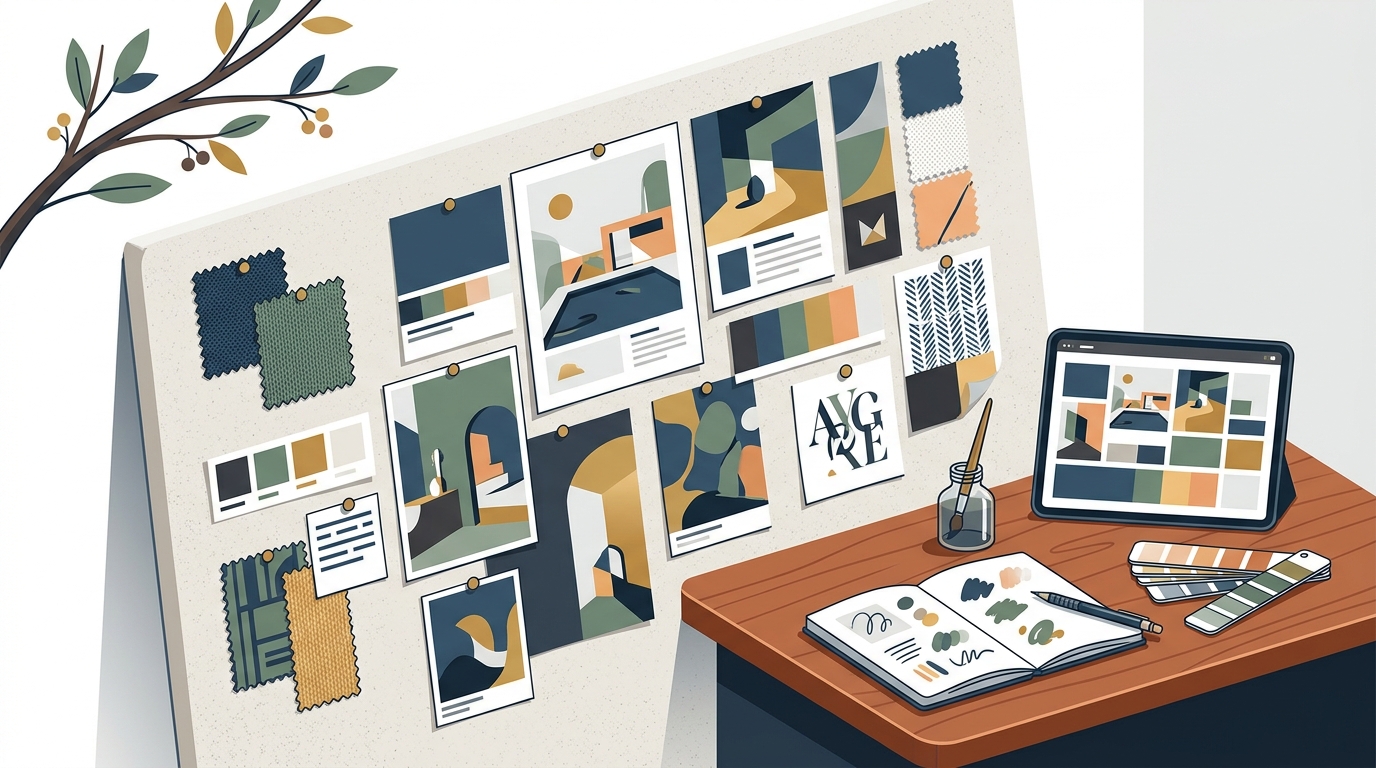
A mood board is a curated collection of images, colors, typography, and textures that establishes a visual direction for a project. Brands with consistent visuals experience up to a 23 percent increase in revenue growth compared to inconsistent competitors. Start by identifying your target audience demographics and core brand values. Map these abstract concepts to concrete visual elements like color palettes and font styles. (A Comprehensive Guide)
Focus on emotional resonance rather than literal product representation. Your board should communicate the feeling you want customers to experience. Clarity in emotional tone reduces creative friction during the production phase. Document your primary and secondary color codes alongside typography pairings for immediate reference.
Curate High-Impact Visual Assets
Collecting reference imagery requires a systematic approach to avoid visual clutter. Gather high-resolution photographs, graphic design samples, and lifestyle photography that align with your brand voice. Strategic image selection directly correlates with higher conversion rates on landing pages. Organize your assets into logical categories such as lighting styles, composition techniques, and background environments.
Color Palette Selection
Colors trigger immediate psychological responses in your target market. Select a primary color that represents your core offering and secondary colors that provide contrast and visual hierarchy. Test your chosen palette against accessibility standards to ensure readability for all users. Remove any hues that clash with your industry norms unless you are intentionally disrupting the market.
Typography and Layout Rules
A brand style guide is a comprehensive document that standardizes visual assets, tone, and usage rules across all marketing channels. Font choices establish the professional tone of your entire visual ecosystem. Pair a bold display font for headlines with a highly readable sans-serif for body text. Maintain consistent spacing and grid structures across all reference images. This structural consistency translates directly into a more polished final output. (How to Create)
Integrate AI-Powered Design Workflows
An AI visual workflow is an automated system that generates product lifestyle images and on-model studio shots based on predefined creative parameters. Manual curation remains valuable, but artificial intelligence accelerates the entire creative process. Automated visual generation reduces production costs by over 60 percent for digital campaigns. You can upload raw product photography and instantly generate diverse background environments that match your mood board specifications. (An Automated Survey)
Explore specialized tools that handle Amazon A+ content and white background image generation simultaneously. These systems maintain brand consistency while scaling output to meet seasonal demand. Explore our blog for detailed breakdowns of automated visual marketing frameworks. Connect your existing asset library to streamline the handoff between creative direction and final production.
Validate Concepts With Stakeholders
Sharing your draft board with internal teams prevents misalignment before production begins. Present your curated assets alongside clear usage guidelines for each department. Review our case studies to see how structured feedback loops improve final output quality. Encourage stakeholders to vote on preferred layouts and color variations using collaborative digital whiteboards.
Address potential compliance requirements early in the validation phase. Ensure all imagery respects trademark guidelines and regional advertising regulations. Document approved variations to create a single source of truth for your design team. This documentation prevents scope creep and keeps project timelines on schedule.
Scale Production Across Channels
Translating your mood board into actual marketing assets requires a standardized production pipeline. Map your approved visual guidelines to specific channel requirements for social media, email campaigns, and web design. Optimize your Amazon listings with AI-generated lifestyle visuals that match your core brand aesthetic. Maintain a centralized asset management system to track version history and usage rights. (How to Create)
Implement automated quality checks to ensure every output meets your predefined standards. Schedule regular audits of your visual assets to identify outdated elements or shifting market trends. Learn more about our mission to help brands scale creative operations without sacrificing quality. Consistent execution builds long-term brand recognition and customer trust.
Visual Strategy Comparison Matrix
| Strategy Type | Primary Use Case | Production Speed | Integration Capability |
|---|---|---|---|
| Traditional Collage | Early-stage brand exploration | Slow | Manual asset management |
| Digital Mood Board | Stakeholder alignment | Moderate | Cloud-based collaboration |
| AI-Generated Visuals | High-volume eCommerce content | Rapid | API and platform integration |
| Hybrid Workflow | Enterprise brand scaling | Fast | Custom workflow automation |
Key Takeaways
- Visual consistency increases revenue growth by up to 23 percent across digital channels.
- AI-powered lifestyle image generation reduces production costs by over 60 percent.
- 50,000+ brands currently trust automated visual platforms for scalable content creation.
- Structured feedback loops prevent creative misalignment before final production begins.
- Centralized asset management systems track version history and usage rights efficiently.
- Hybrid workflows combine human creative direction with machine-speed execution.
- Regular visual audits ensure long-term brand recognition and market relevance.
Frequently Asked Questions
What exactly is a mood board in marketing?
A mood board is a curated collection of images, colors, typography, and textures that establishes a visual direction for a project. It serves as a visual contract between creative teams and stakeholders.
How long does it take to create a professional mood board?
Manual curation typically requires 4 to 8 hours for initial research and assembly. AI-assisted workflows can generate comparable visual frameworks in under 30 minutes.
Can I use a mood board for social media campaigns?
Yes, mood boards establish the foundational aesthetic that guides all social media graphics. They ensure consistent branding across Instagram, LinkedIn, and TikTok campaigns.
What software tools work best for digital mood boards?
Modern platforms integrate directly with cloud storage and design suites. Look for tools that support API connections and automated asset tagging.
How do I ensure my mood board aligns with brand guidelines?
Map every visual element directly to your existing brand style guide. Cross-reference color codes, typography rules, and tone of voice documents before finalizing your selection.
Is AI-generated content safe for enterprise brand use?
Enterprise-grade AI platforms maintain strict data privacy and copyright compliance. They generate original imagery without replicating existing copyrighted works.
Ready to Scale Your Visual Strategy?
Stop spending hours manually assembling reference collections. Start your free trial today and generate high-converting brand visuals in minutes. Our platform handles product lifestyle images, on-model studio shots, and Amazon A+ content automatically. Visit our homepage now to automate your entire creative pipeline.