

How to Generate a Mood Board for Your Brand's Visual Strategy
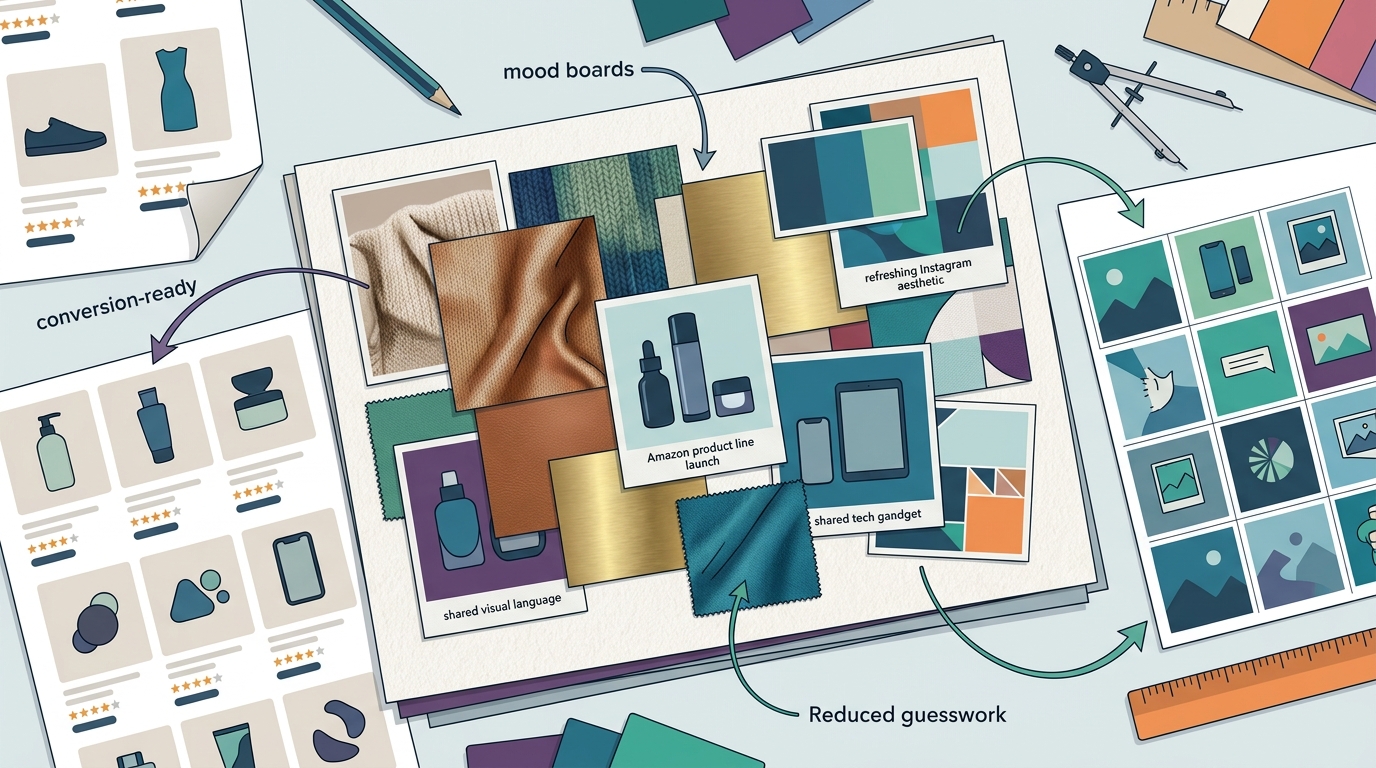
A mood board is the creative compass that keeps every visual asset your brand produces aligned, consistent, and conversion-ready. Whether you are launching a new product line on Amazon or refreshing your Instagram aesthetic, starting with a well-built mood board saves time, reduces guesswork, and gives your entire team a shared visual language. According to Amra and Elma's 2025 visual branding research, 93% of consumers say visual appearance is the key deciding factor in a purchase decision. That statistic alone makes mood boarding one of the highest-leverage activities in your marketing workflow. Below, you will learn exactly how to generate a mood board that fuels a scalable visual strategy.
What Is a Brand Mood Board?
A brand mood board is a curated collection of visual references, including images, color palettes, typography, textures, and keywords, that captures the desired look and feel of your brand. It is not a finished design; it is a strategic starting point that aligns your creative team before any content production begins.
Think of it as a visual brief. As Coursera explains, a mood board can help streamline the brainstorming process by providing a visual display of your ideas for collaborators. For ecommerce brands producing hundreds of product images and ad creatives per quarter, that alignment is not optional; it is essential.
Why Mood Boards Matter for Visual Strategy
Visual consistency builds trust. Research shows that more than half of all brand first impressions are visual, and cohesive visual marketing creates a stronger brand perception. Without a mood board, creative teams often produce assets that drift from the core brand identity, leading to costly revisions and inconsistent customer experiences.
Mood boards also accelerate decision-making. By presenting two or three visual directions early, stakeholders can approve a creative path before expensive production begins. This is especially critical for large brands managing content across Amazon, Shopify, Instagram, and other sales channels simultaneously.
Essential Elements of a Strong Mood Board
Color Palette
A color palette is the set of primary and secondary colors that define your brand's visual tone. Color increases brand recognition by up to 80%, so getting this right on the mood board has a direct impact on downstream performance.
Typography and Imagery
Include typeface samples that communicate your brand character, whether modern, classic, or playful. Pair these with reference images: lifestyle photography, product close-ups, flat lays, or editorial shots that reflect the visual mood you want to achieve.
Textures, Patterns, and Keywords
Textures and patterns add depth and help differentiate packaging and social content. Short keywords such as "minimalist," "organic," or "premium" act as a compass during curation and keep every collaborator anchored to the same vision.
Step-by-Step: How to Generate a Mood Board
Step 1: Define Your Audience and Objectives
Before collecting a single image, clarify who your target customer is and what action you want your visuals to drive. A mood board for an Amazon PDP strategy will look different from one designed for Instagram Reels. Define your platform, product category, and campaign goal first.
Step 2: Gather Inspiration and Competitor Data
Collect visual references from Pinterest, Instagram, competitor listings, and industry trend reports. The goal is volume at this stage; you will curate later. Dresma's AI mood board generator accelerates this step by automatically scanning top-performing visuals across Amazon, Instagram, and competitor channels, delivering data-backed references instead of subjective picks.
Step 3: Curate, Organize, and Share
Narrow your references down to 15 to 25 elements that create a cohesive visual story. Organize them into sections: color, imagery, typography, and texture. Share the board with stakeholders for feedback, then lock it in as the creative brief for all downstream content production. From there, tools like Dresma's AI image generator can translate mood board direction into production-ready visuals at scale.
Traditional vs. AI-Powered Mood Boards
Not all mood boards are created equal. The table below compares the traditional manual approach with an AI-powered workflow like the one offered through Dresma's visual marketing platform.
| Factor | Traditional Mood Board | AI-Powered Mood Board |
|---|---|---|
| Data Source | Manual Pinterest/Google searches | Automated competitor and platform analysis |
| Time to Create | Several hours to days | Minutes |
| Personalization | Dependent on designer skill | Adapts to brand voice, color, and tone automatically |
| Performance Insight | None; purely aesthetic | References backed by engagement and conversion data |
| Platform Optimization | One-size-fits-all | Tailored per channel (Amazon, Instagram, Shopify) |
| Scalability | Low; manual refresh needed | High; updates as market trends shift |
An AI-powered mood board is a mood board generated using machine learning that analyzes real performance data from multiple platforms, then curates visual references tailored to your brand and product category. For enterprise brands that need speed and precision, this approach removes guesswork and grounds creative direction in measurable outcomes.
Scaling Your Mood Board Across Platforms
A single mood board should serve as the master reference, but each platform requires adaptation. Amazon listings demand clean, white-background hero images alongside lifestyle shots, while Instagram rewards editorial, story-driven content. Your mood board should annotate which visual formats apply to which channels.
Dresma's platform is built for this multi-channel reality. Its AI background generator ensures consistent branding across Amazon, Shopify, and social platforms, and the product photography workflow translates mood board direction into marketplace-compliant imagery with human quality checks built in.
Key Takeaways
- A mood board is a visual strategy tool, not just a Pinterest collage. It aligns teams and reduces costly creative revisions.
- 93% of consumers cite visual appearance as the top factor in purchase decisions, making mood boards a revenue driver.
- Essential elements include color palettes, typography, reference imagery, textures, and anchor keywords.
- AI-powered mood boards use competitor and platform performance data to deliver strategic, not just aesthetic, direction.
- Every mood board should be adapted per sales channel: Amazon, Instagram, Shopify, and beyond.
- Starting with a data-backed mood board shortens the path from concept to production-ready content.
- Human review remains important; combine AI speed with expert QC for brand-safe outputs.
Frequently Asked Questions
What is a mood board in visual marketing?
A mood board in visual marketing is a curated arrangement of images, colors, fonts, textures, and keywords that establishes the creative direction for a brand's visual content. It acts as a shared reference for designers, marketers, and stakeholders.
How do I make a mood board for my brand?
Start by defining your audience and campaign objectives. Gather visual inspiration from competitors and trend platforms. Curate 15 to 25 references into sections for color, imagery, typography, and texture. Share with your team for alignment before production begins.
Can AI generate a mood board?
Yes. AI-powered tools like Dresma's mood board generator analyze top-performing content across Amazon, Instagram, and competitor channels, then curate a personalized board grounded in real engagement data rather than guesswork.
What should be included in a brand mood board?
A strong brand mood board includes a defined color palette, typography samples, lifestyle and product reference images, texture or pattern swatches, and short descriptive keywords that capture the desired visual tone.
How is an AI mood board different from a Pinterest board?
A Pinterest board is manually curated based on personal taste. An AI mood board is generated by analyzing performance data from marketplaces and social platforms, so every reference is backed by engagement metrics and audience preferences.
How often should I update my brand mood board?
Review your mood board at least once per quarter or whenever you launch a new product line or campaign. Market trends, competitor strategies, and platform algorithms evolve quickly, and your visual direction should keep pace.
Can I use one mood board for all sales channels?
Use one master mood board for overall brand direction, but adapt it per platform. Amazon, Shopify, and Instagram each have different image specifications and audience behaviors that require tailored visual approaches.
Do mood boards actually improve conversions?
Yes. Brands that maintain consistent, strategic visuals see higher click-through rates and stronger buyer trust. Sellers on Amazon have reported revenue increases of up to 20% simply by improving image quality and consistency.
Get Your Free Data-Backed Mood Board Today
Ready to stop guessing and start creating visuals that convert? Book a free demo with Dresma and get a personalized, data-backed mood board tailored to your brand, product category, and sales channels. See exactly what top-performing content looks like in your niche and turn those insights into production-ready assets with AI plus human quality assurance.