

How to Generate a Mood Board for Your Brand's Visual Strategy
A mood board is a curated collection of visual references that communicates your desired aesthetic and brand direction. For ecommerce brands competing on crowded marketplaces and social feeds, generating one is no longer optional. According to HubSpot's 2025 State of Marketing Report, 92 percent of marketers plan to continue or increase investment in brand awareness campaigns. A well-built mood board turns abstract ideas like "premium but approachable" into concrete visual references your entire team can act on. This guide walks you through every step, from defining your brand's emotional core to scaling mood board insights across sales channels.
What Is a Brand Mood Board?
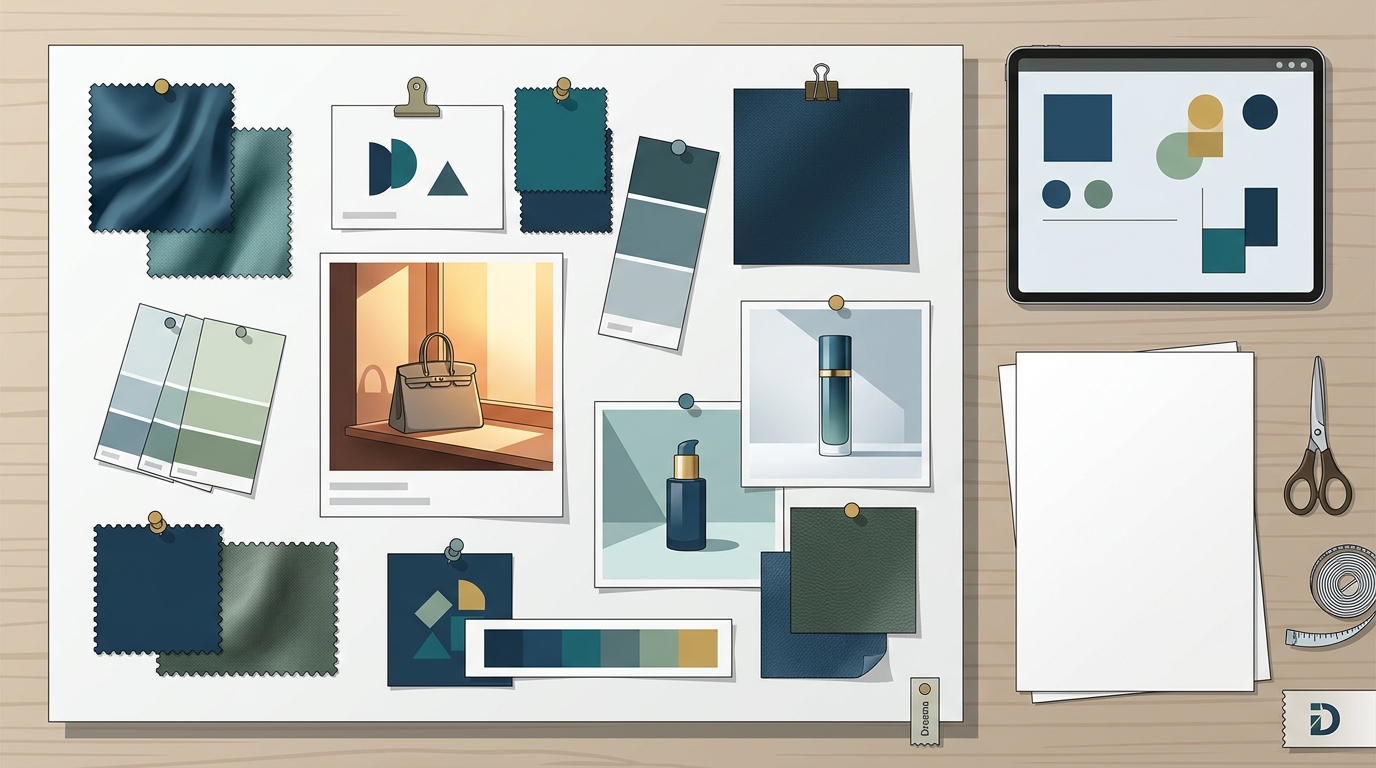
A brand mood board is a visual representation of what you want your brand to feel like. It brings together images, color palettes, typography samples, textures, and keywords into a single reference that guides every design decision your team makes. Think of it as a visual compass that points designers, marketers, and stakeholders in the same creative direction.
Unlike a brand guideline document, a mood board is intentionally fluid. It captures emotion and tone rather than rigid specifications. That flexibility makes it the ideal starting point before you invest in AI product photography or promotional video production.
Why Mood Boards Matter for Visual Strategy
Visual consistency directly impacts revenue. Research from Inkbot Design shows that firms with solid brand identities earn 26 percent more than their counterparts. A mood board is the most efficient tool for establishing that consistency before a single asset is produced.
Faster Team Alignment
Mood boards replace lengthy creative briefs with an at-a-glance reference. Everyone from your CEO to a freelance designer understands the intended direction in seconds, reducing creative rework and miscommunication.
Cross-Channel Cohesion
If your brand sells on Amazon, Shopify, and Instagram simultaneously, visual cohesion across those platforms is critical. A mood board ensures your ecommerce photography and ad creatives share a unified look and feel.
Smarter Creative Investment
By defining direction upfront, you avoid costly reshoots and redesigns. Brands that begin with a mood board can reduce content creation costs significantly and accelerate time to market.
Essential Elements of an Effective Mood Board
A strong mood board is more than a pretty collage. It is a strategic instrument that aligns visual choices with business goals. Include these components:
| Element | Purpose | Example |
|---|---|---|
| Color Palette | Sets emotional tone and brand recognition | 3 to 5 primary swatches with hex codes |
| Typography | Conveys brand personality (modern, classic, playful) | Primary heading font + body font pairing |
| Imagery Style | Defines photography look and feel | Lifestyle shots, flat lays, or studio white |
| Textures & Patterns | Adds tactile depth and differentiation | Linen overlays, geometric patterns |
| Keywords & Brand Values | Anchors visual choices in brand messaging | "Effortless," "Premium," "Sustainable" |
| Competitor References | Identifies gaps and opportunities | Top-performing visuals from rival listings |
Step-by-Step: How to Generate a Mood Board
1. Define Your Brand's Emotional Core
Before gathering a single image, clarify the emotions your brand should evoke. Ask: What feeling should a customer have when they land on our product page? Map those emotions to visual cues like warm versus cool tones, serif versus sans-serif type, and high-contrast versus muted imagery.
2. Gather Inspiration Across Channels
Pull references from platforms where your audience lives: Pinterest, Instagram, Amazon bestseller listings, and even offline sources like packaging or retail displays. Do not limit yourself to your own industry. Architecture, film, and fashion often yield unexpected visual ideas that differentiate your brand.
3. Curate and Organize
Select 15 to 25 reference items and arrange them by theme. Group color swatches together, pair typography samples with imagery, and label each cluster with the emotion or concept it supports. Tools like Canva, Miro, or Pinterest boards work well for digital assembly.
Using AI to Build Data-Backed Mood Boards
Traditional mood boards rely on subjective taste. AI-powered mood boards add a layer of competitive intelligence that grounds your creative direction in performance data. Dresma's AI mood board generator analyzes top-performing visuals across Amazon, Instagram, and competitor channels, then recommends visual formats and themes aligned with your brand identity.
The process follows three steps. First, upload your existing visual content so the platform learns your brand's aesthetic. Second, Dresma benchmarks your visuals against competitors in your category. Third, the tool delivers a customized mood board template tailored to your product range, platform requirements, and desired mood.
This data-driven approach is especially valuable for large brands managing hundreds of SKUs across global marketplaces. Instead of guessing what imagery performs, you start with references proven to convert. Dresma's workflow then extends into AI-powered content creation, so your mood board directly informs the lifestyle shots, flat lays, and ad creatives produced downstream.
Every image also passes through human quality checks, ensuring outputs meet brand standards. That combination of AI speed and human refinement is what separates a scalable visual content production workflow from a basic template tool.
Common Mood Board Mistakes to Avoid
Overloading the board. More is not better. A cluttered mood board dilutes the creative direction instead of sharpening it. Stick to a focused set of references that tell one cohesive story.
Ignoring your audience. A mood board should reflect what resonates with your target customer, not just what your design team finds attractive. Use audience data and competitor analysis to validate your choices.
Treating it as decoration. A mood board is a working document, not wall art. It should be referenced during every creative review and updated as your brand evolves.
Skipping competitor benchmarking. Without understanding the visual landscape of your category, your mood board risks blending in rather than standing out. Platforms like Dresma automate this step by scanning top-performing content in your niche.
Key Takeaways
- A mood board is the essential first step in any brand visual strategy, turning abstract ideas into concrete creative direction.
- Include color palettes, typography, imagery styles, textures, and competitor references for a complete board.
- Brands with strong visual identities earn up to 26 percent more revenue than inconsistent competitors.
- AI-powered mood board generators like Dresma ground creative decisions in real performance data from Amazon, Instagram, and beyond.
- Always benchmark against competitors before finalizing your visual direction.
- Treat the mood board as a living document that evolves with your brand and product line.
- Pair your mood board with an AI content creation workflow to scale from inspiration to production efficiently.
Frequently Asked Questions
What is a mood board in visual marketing?
A mood board in visual marketing is a curated collection of images, colors, fonts, and textures that establishes the creative direction for a brand's visual content. It serves as a shared reference point for designers, marketers, and stakeholders.
How many images should a mood board have?
Most effective mood boards contain 15 to 25 reference items. This range provides enough variety to capture the brand's intended aesthetic without overwhelming viewers or diluting the creative direction.
Can AI generate a mood board automatically?
Yes. AI tools like Dresma's mood board generator analyze competitor visuals and platform trends to produce a data-backed mood board tailored to your brand and product category.
What tools can I use to create a mood board?
Popular options include Pinterest, Canva, Miro, and Adobe XD for manual creation. For data-driven boards that incorporate competitor analysis and performance insights, AI-powered platforms offer a more strategic approach.
How often should I update my brand mood board?
Review your mood board at least once per quarter or whenever you launch a new product line, enter a new market, or refresh your brand identity. Seasonal campaigns may also warrant mood board updates.
What is the difference between a mood board and a brand guide?
A mood board captures the emotional tone and creative direction through visual inspiration. A brand guide is a prescriptive document with exact specifications for logo usage, color codes, and typography rules. The mood board typically comes first and informs the brand guide.
How does a mood board improve ecommerce conversion rates?
By establishing visual consistency across product listings, ads, and social content, a mood board ensures every touchpoint reinforces brand recognition. Consistent branding builds trust, and trust drives conversions. Dresma reports that its AI-powered content workflows have contributed to a 60 percent increase in conversion rates for online sellers.
Can I use one mood board across multiple sales channels?
Yes, but adapt it per platform. A single mood board can define your overarching visual identity, while channel-specific variations account for differences in image dimensions, audience expectations, and marketplace requirements.
Ready to Build Your Data-Backed Mood Board?
Stop guessing what content to create. Book a free demo with Dresma and get an AI-powered mood board that turns competitor insights and platform data into a visual strategy your team can act on today.